
If you’ve spent any time on health podcasts or social media lately, you’ve probably seen peptides come up. They’re everywhere right now — and honestly, for good reason. There’s real science behind them.
But here’s what most of the hype leaves out: the majority of peptide research has been done in animals, not humans. We don’t have the large-scale clinical trials yet that would make this settled science. A lot of what clinicians know comes from working with patients and seeing results firsthand.
At McAlpine Chiropractic in Holland, MI, we believe you deserve the full picture. We’ve added oral peptide therapy to our practice because the early research is compelling, the safety profile looks good, and we’ve seen encouraging results in our own patients. But we’re not going to oversell it — you should know exactly where the evidence stands so you can decide what’s right for you.
Let’s walk through the four peptides we use most and what the research actually says about each one.
What Are Peptides, Anyway?
You’ve probably heard of amino acids — the building blocks of protein. Peptides are just short chains of those amino acids. Your body makes thousands of them naturally. They act like messengers: telling cells where to go, what to repair, and when to dial inflammation up or down.
The peptides used in therapy are either pulled from sequences your body already produces or designed to copy them. Because they speak the same language your cells already understand, they can target specific healing processes without the blunt-force approach of many medications.
If you’re dealing with a stubborn injury, disc problems, or inflammation that won’t quit — that targeted approach is exactly what makes peptides worth paying attention to.
BPC-157: The Injury Repair Peptide
What it is: BPC-157 stands for Body Protection Compound 157. It’s a synthetic peptide based on a protein found naturally in your stomach lining — which is part of why it’s so well-tolerated orally.
What the research says: In animal studies, BPC-157 has shown the ability to speed up healing in tendons, ligaments, muscles, and connective tissue. It appears to promote new blood vessel growth at injury sites and help repair cells get to work faster. Research published in the Journal of Physiology and Experimental and Toxicologic Pathology backs this up.
A 2025 systematic review in Orthopaedic Journal of Sports Medicine (Vasireddi et al.) looked at 544 articles spanning 30 years and found 36 studies that met their criteria — 35 of those were animal studies, and only 1 was in humans. No adverse effects were reported in any of them, but the authors were clear: rigorous, large-scale human trials are still needed.
Human data so far: Three small pilot studies have tested BPC-157 in people — one for knee pain, one for a bladder condition, and a 2025 safety study (Lee & Burgess) that gave intravenous BPC-157 up to 20 mg to two healthy adults with no adverse events.
What we see in practice: Patients using BPC-157 as part of a larger treatment plan have told us they noticed improvements with:
- Ligament sprains that were dragging on
- Tendon issues — rotator cuff, Achilles, patellar
- Muscle tears and strains
- Disc injuries where the surrounding connective tissue was involved
BPC-157 also has gastroprotective properties in animal studies — meaning it may actually help protect your stomach lining. That’s an unusual bonus for something used in musculoskeletal care.
TB-500: The Full-Body Anti-Inflammatory
What it is: TB-500 is a synthetic version of Thymosin Beta-4 — a protein your body naturally floods into wound sites. It’s one of the first responders your immune system sends when tissue gets damaged.
What the research says: In animal studies, TB-500 helps repair cells migrate to where they’re needed and encourages new blood vessel growth. It’s been studied for wound healing, heart tissue repair, and musculoskeletal recovery.
Human data: TB-500 actually has more human data than BPC-157. A phase I safety trial tested doses from 42 to 1,260 mg over 14 days with no toxicity or serious side effects. Human trials have looked at TB-4 for cardiac repair (showing it could “protect and repair” the heart after a heart attack), eye health, and wound healing. That said, it’s not FDA-approved for any medical use, and most of the detailed mechanistic research is still from animal models.
What we see in practice: TB-500 seems especially helpful for:
- Chronic inflammation that’s affecting your whole body
- Muscle injuries and lingering soreness
- Overuse injuries where inflammation has become the problem itself
- Supporting nerve tissue repair
What makes TB-500 stand out is its reach. Unlike many peptides that work locally at one spot, TB-500 circulates through your system and can support healing in multiple areas at the same time.
Cu-GHK (Copper Peptide): The Regeneration Peptide
What it is: GHK-Cu is a naturally occurring copper peptide that was discovered in human blood plasma back in the 1970s. Of all the peptides we’ll discuss here, it has the longest and deepest research history.
What the research says: GHK-Cu stimulates collagen production and tissue regeneration. Studies published in Biomolecules (2019) and across multiple journals show that GHK-Cu can:
- Speed up wound healing and tissue repair
- Activate your body’s antioxidant defense systems
- Reduce the inflammatory signals that drive chronic pain
- Support nerve growth and tissue remodeling
A 2010 paper in Genome Biology found that GHK influences over 4,000 human genes — turning on genes involved in repair while turning off genes linked to inflammation and degeneration. That’s a significant biological footprint for a single peptide.
The Cu-GHK + laser therapy connection: This is where it gets really interesting for what we do. A 2007 study by Huang et al. in Photomedicine and Laser Surgery tested what happens when you combine Cu-GHK with red LED light (625–635 nm) on human skin cells. The results showed that using both together produced dramatically better outcomes than either one alone:
- The cells were 12.5 times more viable (alive and functioning) compared to the group that didn’t receive light
- A key growth factor for tissue repair (bFGF) increased about 230% compared to LED light alone
- The genetic signal for collagen production (COL1) increased about 70% compared to LED light alone
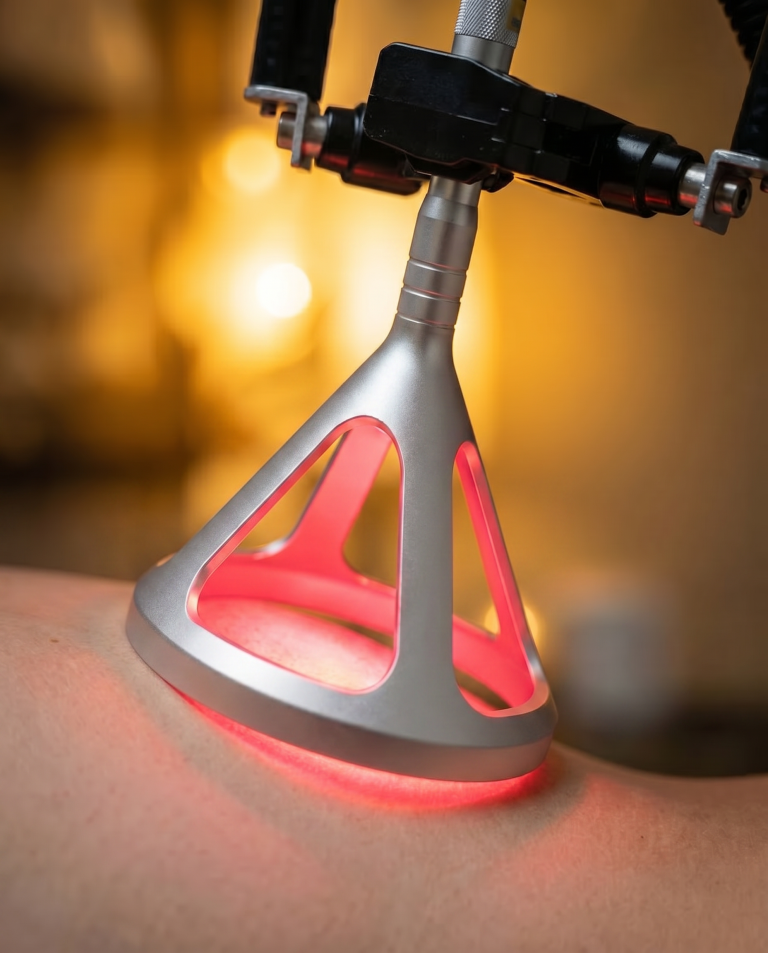
In our office, we’ve applied this clinically by combining Cu-GHK with our Class IV laser therapy, which operates across 4 wavelengths — including the range studied in this research. For stubborn knee pain in particular, we’ve seen encouraging results with this combination, which lines up with what the preclinical data predicts about copper peptides and light therapy working together.
A note on copper interactions: Because GHK-Cu contains copper, there are a few things to be aware of:
- Zinc supplements above 50 mg/day can reduce absorption by competing for the same cellular pathways. If you take zinc, the timing and dose matter — we’ll talk through this during your consultation.
- Copper chelating medications (used for Wilson’s disease) can significantly reduce how well GHK-Cu works. If you have Wilson’s disease, GHK-Cu isn’t appropriate.
- Certain antibiotics (tetracyclines, quinolones) can interact with copper, potentially affecting both the antibiotic and the peptide.
- We always review your medications and supplements before recommending Cu-GHK.
KPV: The Gut-Inflammation Peptide
What it is: KPV is a tiny peptide — just three amino acids (Lysine-Proline-Valine) — derived from a hormone your body uses to regulate inflammation. It represents the anti-inflammatory core of that hormone.
What the research says: In animal and lab studies, KPV has shown strong anti-inflammatory effects, especially in the gut. Research in Gastroenterology (Dalmasso et al., 2008) showed that KPV shuts down key inflammatory signaling pathways at very small concentrations. A 2017 study in Molecular Therapy found that giving KPV orally reduced gut inflammation severity in animal models.
An important note: KPV currently has no published human clinical trials. Everything we know about it comes from animal and cell studies. We’re transparent about that.
Why it’s still relevant: There’s strong research connecting gut inflammation to chronic pain throughout the body. For patients whose pain or slow recovery might be linked to gut issues — whether from autoimmune activity, poor gut health, or metabolic stress — KPV’s preclinical profile is compelling. But we present it as an emerging option, not a proven therapy.
Oral vs. Injectable: What We Carry and Why
One of the first questions patients ask is how peptides are taken. There are two main routes: injection and oral.
Injectable peptides bypass your digestive system entirely, so more of the peptide gets into your bloodstream. Most of the animal research used injections, and they’re better suited for targeting a specific injury site. The downsides: needles, sterile prep, and increasing FDA scrutiny.
Oral peptides are non-invasive — no needles, easy to work into your daily routine. The old knock on oral peptides was that stomach acid would break them down before they could work. Recent delivery technology has changed that significantly, especially liposomal formulations that protect the peptide and improve absorption.
At McAlpine Chiropractic, we carry oral peptides exclusively — specifically from Quicksilver Scientific and InfiniWell.
Quicksilver Scientific operates from an NSF/ANSI 455-2 GMP certified facility in Colorado with an accredited lab. Every batch gets third-party tested. Their liposomal delivery uses small, stable liposomes (20–100 nanometers) that start absorbing in your mouth — significantly better bioavailability than a standard capsule. They offer BPC-157, BPC-157+TB-500, and BPC-157+KPV formulations.
InfiniWell offers capsule-based BPC-157 in both rapid-release and delayed-release formats. Their delayed-release line includes a compound specifically designed to enhance oral peptide absorption. Multiple dosing options give us flexibility in building your protocol.
We chose these brands because they meet our standards for testing, manufacturing quality, and transparency. We don’t carry injectables.
How We Actually Use Peptides in Our Practice
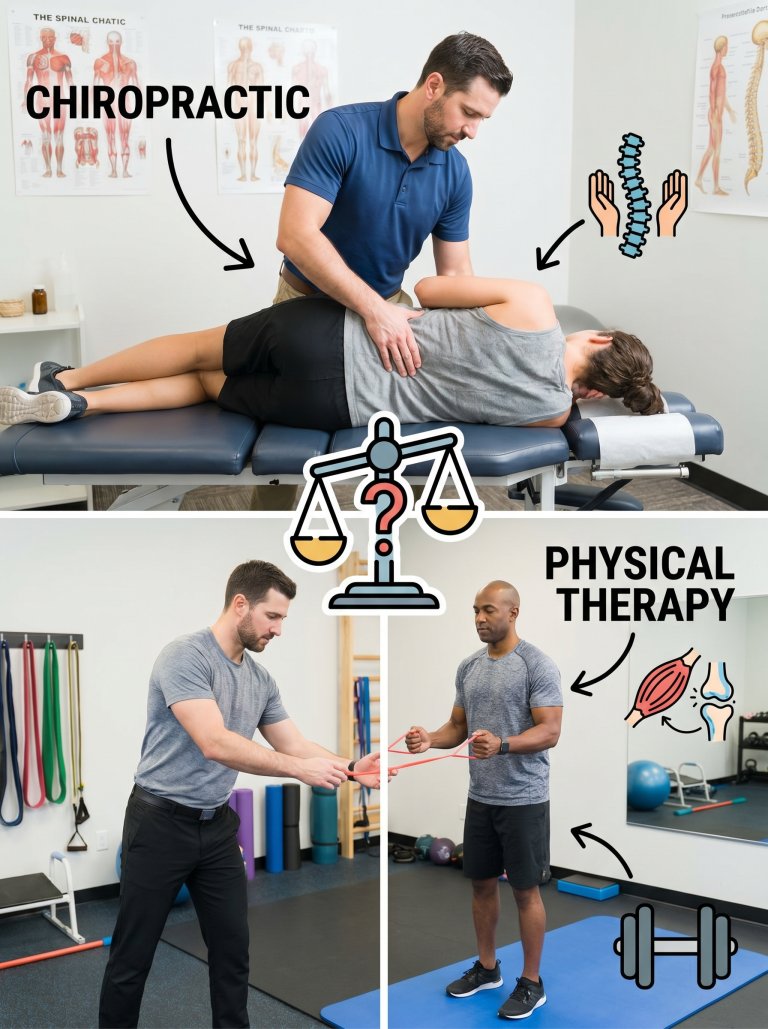
Peptide therapy is never our starting point. The foundation of what we do is chiropractic adjustment and non-surgical spinal decompression. Those are well-established treatments that, for most patients, produce real and lasting relief on their own.
Where peptides come in is as an accelerator — when we want to speed up healing or give your body extra support on a tough case. They work by improving the biological environment where healing happens: the cellular signals, collagen production, and inflammation regulation that determine how fast your tissues actually repair.
Our typical protocols:
- BPC-157 + TB-500 + Cu-GHK — for stubborn chronic pain, serious disc issues, or injuries that have been slow to respond. This hits tissue repair, systemic inflammation, and collagen regeneration all at once.
- Cu-GHK on its own — for patients who want to support healthy collagen in their joints. Often used as a maintenance protocol for degenerative joint changes or proactive tissue health.
- Cu-GHK + Class IV laser therapy — based on the Huang et al. (2007) research showing they work better together. We combine oral Cu-GHK with our multi-wavelength laser treatments for joint pain, especially knee pain, where we’ve seen encouraging results.
- BPC-157 + KPV — for patients where gut inflammation may be fueling their chronic pain.
We also coordinate with your primary care physician and any specialists. Peptides work best as part of a team approach to your health.
Is Peptide Therapy Right for You?
Not every patient is a candidate, and not every peptide is right for every situation. We evaluate each case individually. The patients who tend to benefit most are dealing with:
- Chronic musculoskeletal injuries that haven’t fully healed with conventional treatment
- Disc injuries (herniated, bulging, degenerative) with ongoing inflammation
- Post-surgical recovery that’s hit a wall
- Systemic inflammation contributing to chronic pain
- Athletic recovery — getting back faster without cutting corners
- Joint degeneration where collagen support could make a real difference
If you’ve been dealing with pain or an injury that just won’t fully resolve, a consultation is the right starting point. We’ll look at your history, any imaging you have, and the full picture of your health to figure out whether peptides belong in your plan.
Frequently Asked Questions About Peptide Therapy
Are peptides safe?
The peptides we use are generally well-tolerated — most are based on sequences your body already produces. That said, large-scale human safety studies are still limited for most therapeutic peptides. We review your health history, medications, and supplements before recommending anything, and we talk through potential risks openly during your consultation.
Why are most studies done on animals?
This is standard for any new area of medicine. Animal studies come first, then human trials. The preclinical data for these peptides is strong, but we’re still early in building the human evidence base. It’s a real point of debate in the field — some clinicians point to years of positive patient outcomes, while others want to see more formal trials. We think both perspectives have merit, and we present them honestly.
How are peptides administered at your office?
We use oral peptides only — no injections. We carry products from Quicksilver Scientific (liposomal) and InfiniWell (capsule). Both are easy to work into your daily routine, and recent delivery technology has made oral peptides much more effective than they used to be.
How long before I notice results?
It depends on what we’re treating and how severe it is. Some patients feel a difference within a few weeks. More complex or long-standing issues usually need a longer protocol. We set realistic expectations upfront during your consultation.
Is peptide therapy covered by insurance?
Most plans don’t cover it at this time. We’re upfront about pricing during your consultation. Call 616-392-7031 with any questions.
Will peptides interfere with my medications?
It depends on the peptide. Cu-GHK has the most interaction potential — zinc supplements above 50 mg/day, copper chelating medications, and certain antibiotics (tetracyclines, quinolones) can all affect it. BPC-157, TB-500, and KPV generally have low interaction risk based on available data, but we review your full list during consultation regardless.
How is this different from steroids or hormones?
Peptides are neither steroids nor hormones. They’re short chains of amino acids that act as signaling molecules. They don’t carry the systemic hormonal effects or risks that come with anabolic steroids or hormone therapy.
Ready to Find Out if Peptides Could Help Your Recovery?
If you’ve been living with a stubborn injury, chronic pain that won’t fully resolve, or a recovery that’s stalled out — let’s talk about whether peptide therapy should be part of your plan.
Call McAlpine Chiropractic in Holland at 616-392-7031 to schedule a consultation. We’ll go through your case, talk about your goals, and give you an honest picture of what peptides can and can’t do — based on what the research shows and what we’ve seen in practice.
Book your appointment online or call us today.
References:
- Vasireddi N, et al. “Emerging Use of BPC-157 in Orthopaedic Sports Medicine: A Systematic Review.” Orthopaedic Journal of Sports Medicine, 2025.
- Lee & Burgess. “Safety of Intravenous Infusion of BPC157 in Humans: A Pilot Study.” Alternative Therapies in Health and Medicine, 2025.
- Huang PJ, et al. “In vitro observations on the influence of copper peptide aids for the LED photoirradiation of fibroblast collagen synthesis.” Photomedicine and Laser Surgery, 25(3):183–190, 2007.
- Pickart L, et al. “GHK Peptide as a Natural Modulator of Multiple Cellular Pathways in Skin Regeneration.” BioMed Research International, 2015.
- Pickart L, Margolina A. “Regenerative and Protective Actions of the GHK-Cu Peptide in the Light of the New Gene Data.” International Journal of Molecular Sciences, 2018.
- Hong Y, et al. “GHK-Cu influences gene expression of over 4,000 human genes.” Genome Biology, 2010.
- Dalmasso G, et al. “PepT1-Mediated Tripeptide KPV Uptake Reduces Intestinal Inflammation.” Gastroenterology, 2008.
- Xiao B, et al. “Orally Targeted Delivery of Tripeptide KPV via Hyaluronic Acid-Functionalized Nanoparticles.” Molecular Therapy, 2017.