
How long does sciatica usually last?
Most cases of sciatica resolve within 4 to 8 weeks with conservative care, though about 30% can become chronic without treatment. Severity depends on the underlying cause — herniated disc, piriformis syndrome, or SI joint dysfunction. A 2015 systematic review in The Spine Journal found chiropractic care comparable to surgery for sciatica relief at 12 months (Lewis et al., 2015).
Last Updated: April 20, 2026
Sciatica treatment starts with understanding what you’re actually dealing with. Sciatica is pain that travels along the sciatic nerve — the longest nerve in your body — from your lower back through your hip and down the back of your leg. It’s not a disease. It’s a signal that something in your lumbar spine is pressing on a nerve, and until you fix that, the pain keeps coming back.
If you’ve been dealing with shooting leg pain, numbness that runs into your foot, or a burning sensation down the back of your thigh, you’re probably frustrated. Maybe you’ve tried stretching, rest, ibuprofen, or even a round of physical therapy — and you’re still hurting. You’re not alone. At McAlpine Chiropractic in Holland, MI, sciatica is one of the most common conditions we treat, and most patients who walk through our door have already tried at least two or three things that didn’t work.
Here’s why — and what actually does.
Why Does Sciatica Happen?
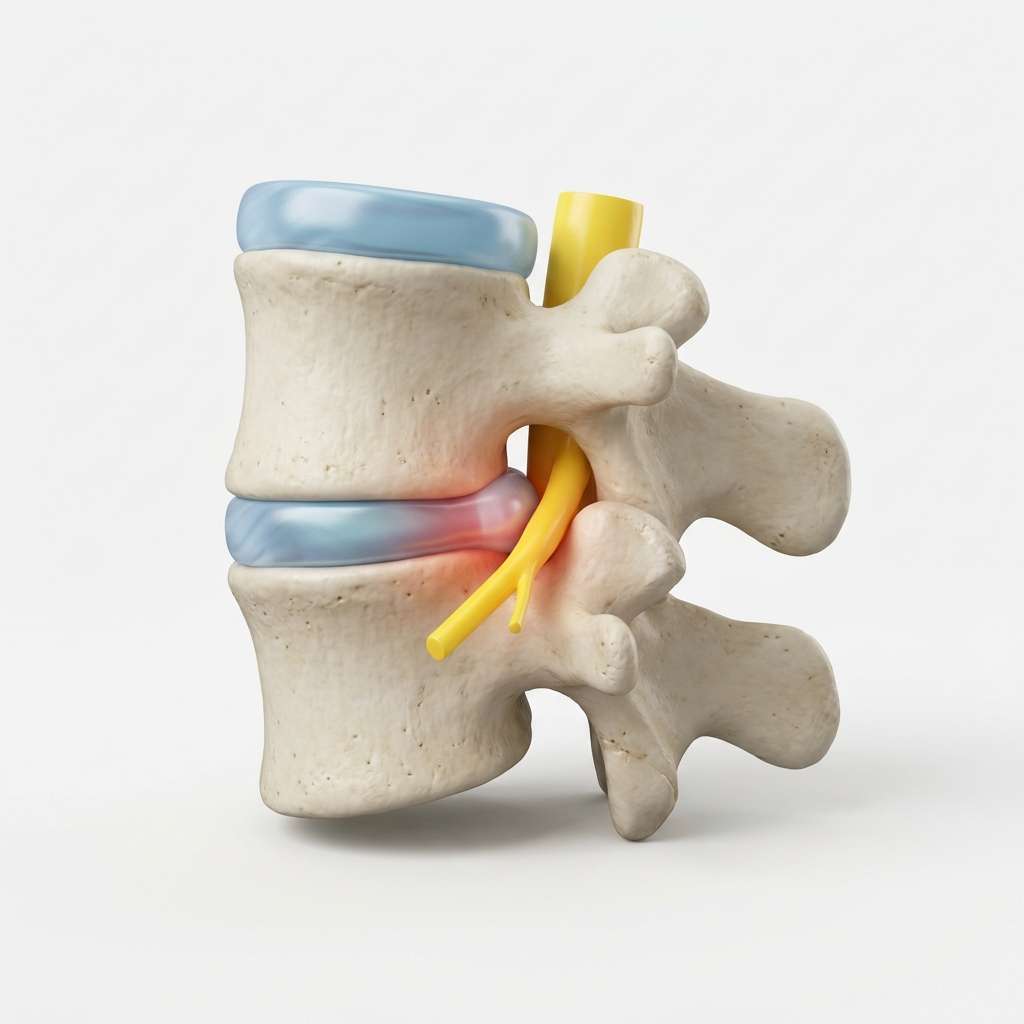
Your sciatic nerve runs from nerve roots L4 through S3 in your lower spine, down through your hip, and into your leg. When something compresses or irritates those nerve roots, you feel it — sometimes all the way to your toes.
The most common causes:
- Herniated or bulging disc — disc material pushes outward and presses on the nerve. This is the #1 cause.
- Spinal stenosis — the spinal canal narrows, crowding the nerve. More common over age 50.
- Degenerative disc disease — discs lose height and hydration over time, reducing the space around the nerve.
- Piriformis syndrome — a deep muscle in your buttock tightens and compresses the nerve where it passes underneath.
The important thing is that sciatica is a symptom, not a diagnosis. The real question is what is pressing on the nerve — because that determines what treatment will actually help.
Why Hasn’t Your Sciatica Gotten Better?
This is the question we hear most. Patients come in and say, “I’ve been dealing with this for months and nothing is working.” Here’s what’s usually going on.
You’re treating the pain, not the cause. Anti-inflammatories and muscle relaxers reduce symptoms temporarily. But if a disc is pressing on your nerve, medication doesn’t move the disc. The pain comes back as soon as the pills wear off.
Stretching alone isn’t enough. Gentle stretching can help with piriformis-related sciatica, but if the compression is coming from a structural problem in your spine — a herniated disc, a misaligned vertebra — stretching won’t fix that. A network meta-analysis of 122 studies published in The Spine Journal (Lewis et al., 2015) found that spinal manipulation produced statistically significant improvements in sciatica recovery compared to conventional care — while exercise therapy alone did not show the same benefit.
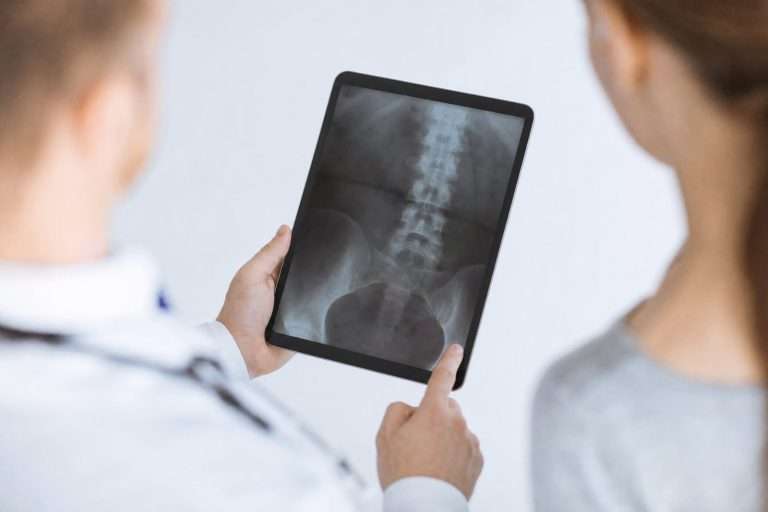
You haven’t gotten a clear diagnosis. Many patients with sciatica never get imaging. They get a clinical guess and a generic treatment plan. At McAlpine Chiropractic, our doctors can order X-rays and MRI to see exactly what’s going on before we start treatment — so you’re not guessing.
How We Treat Sciatica at McAlpine Chiropractic
We use three treatments — individually or combined, depending on what’s causing your sciatica.
Chiropractic Adjustments
Chiropractic adjustments mobilize the vertebrae in your lower spine. When vertebrae shift out of position and get stuck, they create pressure on the nerve roots that form the sciatic nerve. Correcting that alignment relieves the pressure directly. Most patients notice improvement within the first few visits.
Non-Surgical Spinal Decompression
For more serious disc-related sciatica — herniated discs, bulging discs, degenerative disc disease — our FDA-cleared SpineMed decompression table is one of the most effective non-surgical options available. It gently stretches the lumbar spine, creating negative pressure that pulls disc material away from the nerve. No needles, no anesthesia, no downtime.
Class IV Laser Therapy
Class IV laser therapy delivers concentrated energy deep into the inflamed tissue around the sciatic nerve. It reduces inflammation, accelerates tissue repair, and provides pain relief — often noticeable after the very first session. When combined with adjustments and decompression, each treatment reinforces the others.
“We don’t pick one treatment and hope for the best,” says Phillip Maletta, DC, chiropractor at McAlpine Chiropractic. “We find out exactly what’s compressing the nerve — a disc, an alignment issue, inflammation — and then we build a plan that addresses all of it. That’s why our patients get results that last.”
How Do You Know If Your Sciatica Needs Professional Treatment?
Some mild sciatic irritation resolves on its own within a few days. But if you’re dealing with any of these, it’s time to get evaluated:
- Pain radiating from your lower back into your leg that lasts more than a week
- Numbness or tingling in your leg, foot, or toes
- Weakness that makes it hard to walk or stand
- Pain that gets worse when you sit, sneeze, or cough
- Symptoms in both legs (this is less common but more serious)
Don’t wait for it to get worse. Research published in the European Spine Journal (Peul et al., 2007) showed that patients who received early treatment for sciatica had better long-term outcomes and lower rates of chronic pain than those who adopted a wait-and-see approach.
Frequently Asked Questions About Sciatica Treatment
How long does sciatica take to heal with chiropractic care?
Most patients see significant improvement within 4 to 8 weeks of consistent treatment. Mild cases may respond in 2 to 3 weeks. Severe or chronic sciatica involving disc herniation may take 8 to 12 weeks. Your timeline depends on the underlying cause and how long it’s been going on.
Is chiropractic or physical therapy better for sciatica?
They work best together. Chiropractic care corrects the structural problem — the misalignment or disc issue compressing the nerve. Physical therapy strengthens the muscles that support the spine long-term. At McAlpine Chiropractic, our doctors have taken national board exam for physical therapy and can provide limited corrective exercises in-house. When a patient needs more extensive rehab, we refer to trusted local PTs.
Can sciatica come back after treatment?
It can, especially if the original cause isn’t fully addressed. That’s why we focus on correcting the structural problem, not just reducing pain. Maintenance care and at-home exercises help prevent recurrence. Most patients who complete their full treatment plan report lasting relief.
Do I need an MRI before starting sciatica treatment?
Not always, but imaging helps. Our doctors at McAlpine Chiropractic in Holland, MI can order X-rays and MRI when clinically indicated — no separate referral needed. If your exam suggests disc involvement or your symptoms are severe, we’ll recommend imaging right away.
What’s the fastest way to get sciatica relief?
The fastest relief comes from treating the cause. We often combine chiropractic adjustments with laser therapy for rapid pain reduction in the first visit, then add decompression as needed. This multi-treatment approach delivers faster results than any single therapy alone.
Is spinal decompression safe?
Yes. Our FDA-cleared SpineMed table is gentle, non-invasive, and well-tolerated. Most patients find it comfortable. It’s one of the most effective non-surgical options for disc-related sciatica. Learn more on our spinal decompression page.
Stop Guessing. Start Healing.
If sciatica has been running your life for weeks or months, you don’t need another bottle of ibuprofen. You need someone who will find out what’s actually causing the pain and fix it.
McAlpine Chiropractic in Holland, MI has the diagnostic tools, the treatment technology, and the experience to get you out of pain and back to your life. Read our full sciatica treatment guide for more detail on our approach, or take the first step today.
Call 616-392-7031 or book your appointment online.